


Integrated Biomethane Upgrading and CO₂ Valorisation
Regaco delivers advanced biogas upgrading systems in partnership with Kanadevia Inova Biomethan GmbH.
We provide membrane-based upgrading solutions as standard — and amine scrubbing systems when required — combined with engineered CO₂ liquefaction plants for industrial reuse and transport.
From feasibility to commissioning, we support full-scope upgrading projects across Europe.
TECHNOLOGY OVERVIEW

Membrane Biogas Upgrading – M Series
High-performance physical separation technology with up to 99.8% methane recovery and low methane slip (<0.5%).
Designed for fast load adjustment and high operational reliability.

Amine Scrubbing (A-Series)
Chemical absorption process delivering highest methane purity and extremely low methane slip (<0.1%).
Ideal for projects prioritising maximum biomethane yield and high CO₂ purity.

CO₂ Liquefaction and Recovery Systems
Integrated CO₂ conditioning and liquefaction systems producing ISBT / EIGA grade liquid CO₂ for industrial and food applications.
CO₂ liquefaction enables valorisation of biogenic CO₂ for food-grade, industrial and Power-to-X applications, supporting circular carbon utilisation strategies.
Why Work With Regaco as Your Kanadevia Inova Partner?
• Local Nordic regulatory knowledge
• Grid integration expertise (TSO/DSO experience)
• Single-point-of-contact during development phase
• Commercial and contractual interface
• Long-term regional presence
• Proven project track record in Denmark
• Local permitting and grid injection
• Commercial structuring and contract interface
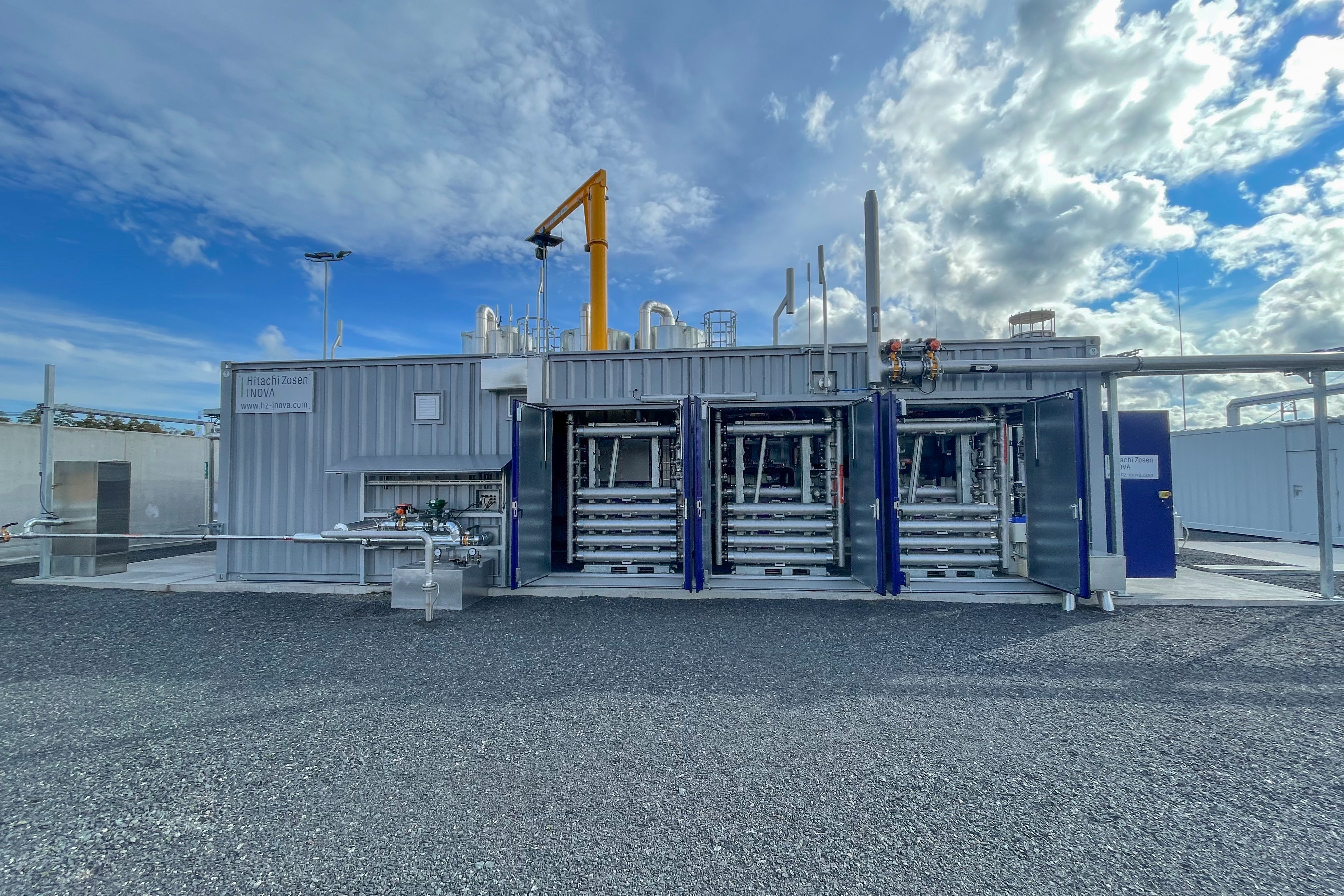
Membrane Biogas Upgrading – M-Series
Membrane Biogas Upgrading – M-Series
- 200 – 2,000 Nm³/h input capacity per line
- Methane recovery up to 99.8%
- <0.5% methane slip
- 98% technical availability
- Containerised plug-and-play design, with short lead time
Why membrane?
- Flexible operation
- Lower heat demand than amine
- Compact footprint
- Suitable for decentralised AD plants
- Possibility for heat recovery
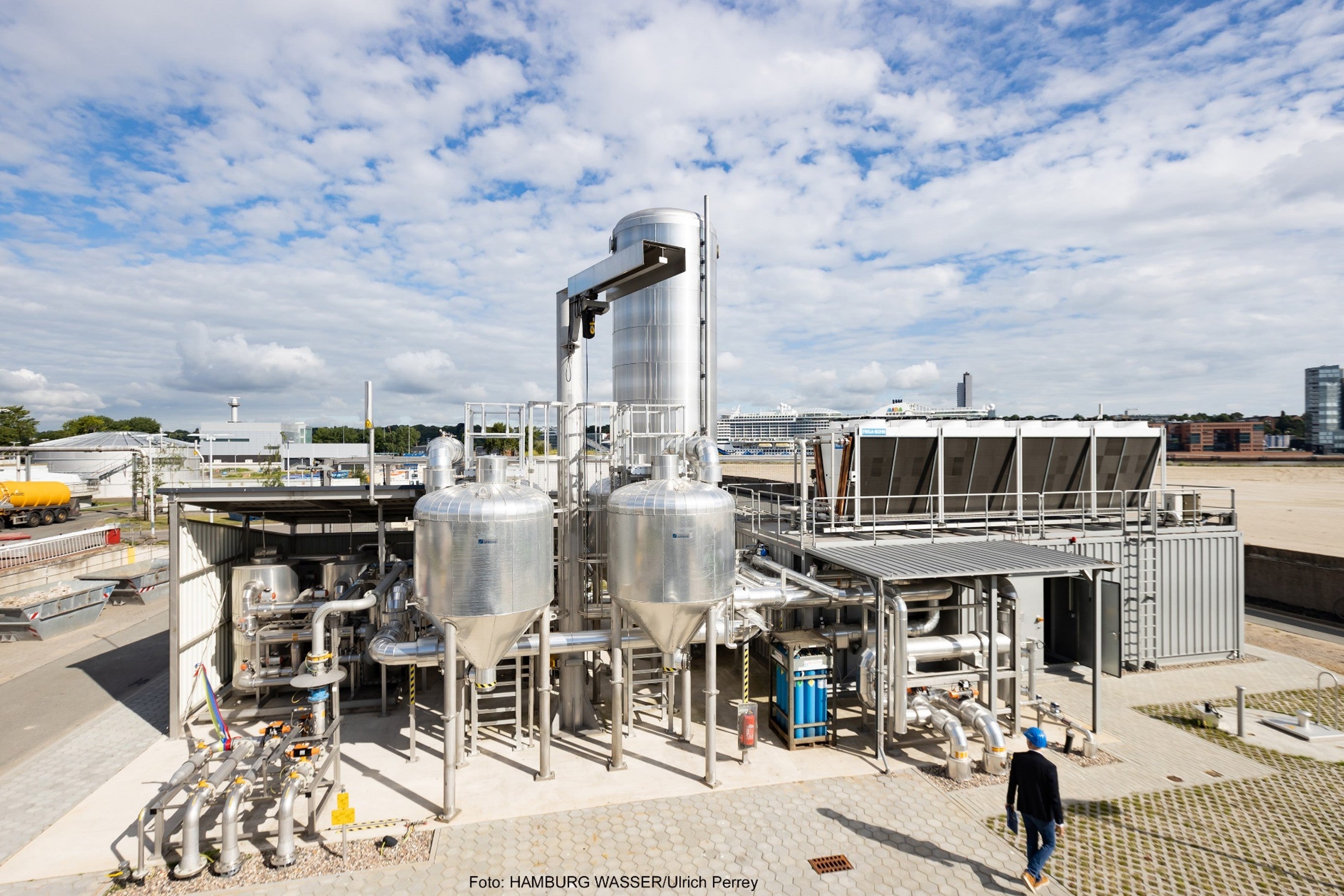
Amine Scrubbing – A-Series
The A-Series uses MDEA-based absorption technology for:
- Methane recovery up to 99.8%
- Methane slip <0.1%
- Extremely high CO₂ purity
- Lowest electricity consumption (~0.06 kWh/Nm³BG)
When to choose amine:
- High biomethane purity requirements
- Centralised plants
- Projects with available waste heat
- When CO₂ quality is critical for liquefaction
CO₂ Liquefaction and Conditioning
Key Data:
- 300–2,500 kg CO₂/h (Model S / M / L)
- >94% capture rate
- EIGA / ISBT / PTX grade possible
- 97% technical availability
CO₂ Liquefaction Process Overview
CO₂ liquefaction enables valorisation of biogenic CO₂ streams for food-grade, industrial and Power-to-X applications, supporting circular carbon utilisation.
The liquefaction system is engineered as a fully integrated conditioning and purification sequence:
1) Compression:
Raw CO₂ is compressed to the required pressure for downstream processing.
2) Drying:
Residual moisture is removed to prevent freezing and corrosion.
3) Gas Conditioning
Impurities are removed via Direct Contact Cooling and activated carbon polishing.
4) Liquefaction
CO₂ is condensed into liquid phase under controlled temperature and pressure conditions.
5) Stripping & Purification
Non-condensable gases such as O₂, N₂ and residual methane are separated.
6) Storage & Transfer
Liquid CO₂ is stored and prepared for industrial use or transport.
Proven Nordic Reference Projects
Projects executed by Kanadevia Inova with Regaco as Nordic project partner and commercial representative.

Membrane upgrading unit
900 Nm3/h
Pretreatment, drying and grid injection
Commissioned 2022
Gråsten, Denmark
Membrane upgrading unit
2 x 2,000 Nm3/h
Pretreatment, drying and grid injection
Commissioned 2026
Odense, Denmark

CO₂ Liquefaction Unit
2 x 2,100 kg/h
Liquefaction, truck filling, certification & PTX + Food grade
Commissioned 2026
Kalundborg, Denmark

Membrane upgrading unit
2,000 Nm3/h
Pretreatment, drying and grid injection
Commissioned 2026
Nysted, Denmark
Technical Capabilities
Technical and process capabilities supporting high-performance biomethane upgrading and CO₂ liquefaction projects.
Food-Grade and Industrial CO₂ Quality Specifications (ISBT / EIGA / PtX Applications)
Food-Grade and Industrial CO₂ Quality Specifications (ISBT / EIGA / PtX Applications)
Liquid CO₂ recovered from biogas upgrading plants must comply with strict international food-grade and industrial CO₂ standards to be commercially viable in beverage, greenhouse, industrial gas and Power-to-X applications.
Kanadevia Inova CO₂ liquefaction systems are engineered to deliver beverage-grade and industrial-grade liquid CO₂ in accordance with recognised ISBT and EIGA specifications.
- ISBT (International Society of Beverage Technologists) standards
- EIGA (European Industrial Gases Association) guidelines
- PTX Grade applications and CCS-compliance
Typical product specifications include:
- CO₂ purity ≥ 99.9%
- Water (H₂O) ≤ 20 ppm
- Oxygen (O₂) ≤ 30 ppm
- Total sulphur ≤ 0.1 ppm
- Controlled hydrocarbon content
The liquefaction process integrates advanced drying, contaminant removal and stripping stages to ensure compliance with beverage-grade and industrial-grade CO₂ requirements.
By combining membrane or amine upgrading with downstream CO₂ purification and liquefaction, biomethane producers can transform process off-gas into a high-value liquid CO₂ product suitable for food, greenhouse, industrial and e-fuels applications.
This integrated approach significantly improves overall plant economics and reduces CO₂ emissions associated with venting.
Membrane vs Amine Biogas Upgrading – Selecting the Right Technology
Membrane vs Amine Biogas Upgrading – Selecting the Right Technology
Selecting the appropriate biogas upgrading technology depends on plant size, energy availability, methane recovery requirements and downstream CO₂ valorisation strategy.
Kanadevia Inova offers both membrane-based upgrading (M-Series) and amine scrubbing systems (A-Series), each suited for different project conditions.
Membrane Upgrading
Membrane upgrading uses physical gas separation to selectively permeate CO₂ from methane. It offers:
- Methane recovery up to 99.8%
- Methane slip typically below 0.5%
- Moderate electricity consumption
- No thermal energy requirement
- Fast load flexibility
Membrane systems are particularly suitable for decentralised biogas plants and projects requiring compact, modular containerised solutions.
Amine Scrubbing
Amine upgrading uses chemical absorption (typically MDEA-based) to remove CO₂ from biogas. It offers:
- Methane recovery up to 99.8%
- Extremely low methane slip (<0.1%)
- Lower electricity demand
- Higher thermal energy demand
- Very high CO₂ purity
Amine systems are well suited for larger centralised plants and projects where maximum methane yield and high-purity CO₂ recovery are critical.
Integrated CO₂ Liquefaction Considerations
When integrated CO₂ liquefaction is planned, technology selection may also depend on:
- Required CO₂ purity
- Desired CO₂ recovery rate
- Available heat and power
- Long-term operational strategy
Regaco supports project developers in evaluating membrane versus amine upgrading within a full lifecycle and total cost of ownership (TCO) framework.
Our role as official partner of Kanadevia Inova Biomethan GmbH ensures access to both technologies, allowing project-specific optimisation rather than a one-technology approach.
Full-Scope Delivery
Regaco and Kanadevia Inova Biomethan GmbH together support:
Feasibility studies
Gas analysis & RFQ structuring
EPC delivery
Integration to grid injection
CO₂ storage & loading infrastructure
Commissioning & performance optimisation